
Table of Contents
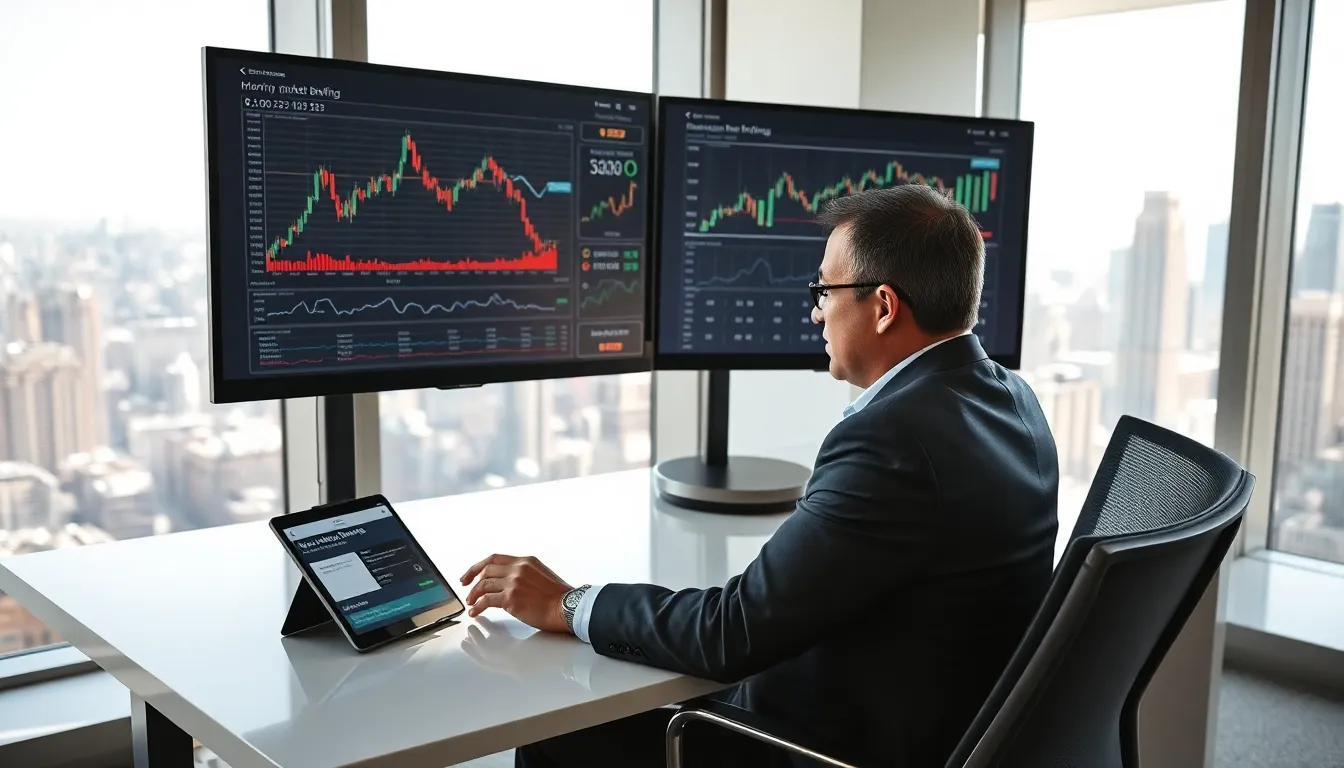
ToggleStock market updates vs. real-time trading alerts, investors face this choice daily. Both tools serve different purposes, and choosing the wrong one can cost money or missed opportunities. Stock market updates provide broad snapshots of market performance. Real-time trading alerts deliver instant notifications about specific price movements or events. The right choice depends on investment goals, trading frequency, and risk tolerance. This guide breaks down the key differences between stock market updates and trading alerts, helping investors decide which approach fits their strategy best.
Key Takeaways
- Stock market updates provide broad market summaries with context and analysis, while real-time trading alerts deliver instant notifications about specific price movements.
- Long-term investors benefit most from scheduled stock market updates, whereas active traders need real-time alerts to catch quick opportunities.
- Stock market updates explain why markets moved, but they arrive after events occur—making them less useful for time-sensitive trading decisions.
- Real-time alerts can cause information overload and decision fatigue if investors track too many stocks with multiple trigger conditions.
- The most effective strategy often combines both tools: use stock market updates for broader context and set targeted alerts for specific entry or exit points.
- Match your information tools to your investment goals—a retirement portfolio requires different monitoring than an active trading account.
Understanding Stock Market Updates
Stock market updates summarize what happened in financial markets over a specific period. These updates cover index movements, sector performance, and major economic news. Most updates appear on financial news sites, apps, and brokerage platforms.
The format varies. Some stock market updates arrive as morning briefings before markets open. Others summarize the trading day after the closing bell. Weekly and monthly recaps offer broader perspectives on trends.
Stock market updates typically include:
- Index performance: How the S&P 500, Dow Jones, and NASDAQ moved
- Sector analysis: Which industries gained or lost ground
- Economic indicators: Employment data, inflation reports, and GDP figures
- Earnings highlights: Company results that moved stock prices
- Global market news: International developments affecting U.S. markets
Investors use stock market updates to stay informed without watching screens constantly. A retiree managing a diversified portfolio might read morning updates with coffee. A busy professional could scan evening summaries during the commute home.
The main benefit of stock market updates lies in context. They explain why markets moved, not just how much. This context helps investors understand larger forces shaping their portfolios.
But, stock market updates have limitations. They arrive after events occur. A stock might drop 5% before the next scheduled update. For passive, long-term investors, this delay rarely matters. For active traders, it can mean the difference between profit and loss.
How Real-Time Trading Alerts Differ
Real-time trading alerts notify investors the moment specific conditions occur. These alerts trigger immediately when a stock hits a target price, breaks through resistance, or experiences unusual volume.
Unlike stock market updates, trading alerts focus on individual securities rather than broad market trends. An investor sets parameters, and the system watches continuously. When conditions match, the alert fires, via push notification, email, or text message.
Common types of real-time trading alerts include:
- Price alerts: Notifications when a stock reaches a specific price point
- Percentage change alerts: Triggers when a stock moves up or down by a set percentage
- Volume alerts: Warnings about unusual trading activity
- Technical indicator alerts: Signals based on moving averages, RSI, or other metrics
- News alerts: Instant notifications about company announcements
Real-time trading alerts serve active investors who act quickly on market movements. Day traders rely on these alerts to catch short-term opportunities. Swing traders use them to enter positions at optimal price points.
The speed advantage is significant. Markets move fast. A stock breaking above resistance at 10:47 AM won’t wait for the evening stock market updates. Real-time alerts capture these moments instantly.
But alerts come with drawbacks too. They can create information overload. An investor tracking 50 stocks with multiple alert conditions might receive hundreds of notifications daily. This noise can lead to decision fatigue or impulsive trades.
Alerts also lack context. They tell investors what happened but not why. A price spike could signal genuine momentum or a temporary glitch. Stock market updates provide the analysis that alerts omit.
Key Differences Between Updates and Alerts
Stock market updates and real-time trading alerts solve different problems. Understanding these differences helps investors pick the right tool.
Timing and Delivery
Stock market updates follow schedules. Morning briefings arrive before trading starts. Evening summaries appear after markets close. This predictability helps investors plan their information intake.
Real-time trading alerts operate continuously. They arrive whenever trigger conditions occur, during market hours, after hours, or pre-market. This constant flow suits investors who need immediate information.
Scope and Focus
Stock market updates cast a wide net. They cover entire markets, multiple sectors, and macroeconomic factors. One update might discuss Federal Reserve policy, tech earnings, and oil prices in the same report.
Trading alerts zoom in on specific securities. An alert tells an investor that Apple hit $200 or Tesla dropped 3%. It ignores everything else happening in the market.
Analysis vs. Data
Stock market updates include interpretation. Analysts explain market movements, identify trends, and offer perspective. This analysis helps investors understand the bigger picture.
Trading alerts deliver raw data. They report facts without commentary. Investors must supply their own analysis and context.
Best Use Cases
| Feature | Stock Market Updates | Real-Time Alerts |
|---|---|---|
| Frequency | Scheduled (daily, weekly) | Continuous |
| Focus | Broad market trends | Individual securities |
| Analysis | Included | Not included |
| Best for | Long-term investors | Active traders |
| Risk of overload | Low | High |
Many successful investors use both. They read stock market updates for context and set targeted alerts for specific opportunities. This combination provides both the forest view and the individual trees.
Choosing the Right Approach for Your Investment Style
The choice between stock market updates and real-time alerts depends on how someone invests.
Long-Term Investors
Buy-and-hold investors benefit most from stock market updates. They don’t need minute-by-minute notifications about portfolio holdings. Daily or weekly updates provide enough information to stay informed without causing unnecessary anxiety.
For long-term investors, real-time alerts make sense only for major events, like a stock dropping 10% or reaching a sell target. Otherwise, constant notifications distract from the patient approach that builds wealth over decades.
Active Traders
Day traders and swing traders need real-time alerts. Their profits depend on catching quick price movements. Waiting for the next stock market updates could mean missing opportunities worth hundreds or thousands of dollars.
Active traders should still consume stock market updates for broader context. Understanding why markets are moving helps traders anticipate which alerts might signal genuine opportunities versus noise.
Hybrid Investors
Many investors fall between these extremes. They hold long-term positions but occasionally trade around events or valuations. For them, a combination works best.
A practical approach: Read morning stock market updates to understand the day’s setup. Set alerts for specific entry or exit points on watched stocks. Review evening updates to assess what happened and adjust strategy.
Practical Tips for Either Approach
- Limit alert quantity: More alerts create more noise. Focus on truly important triggers.
- Choose quality sources: Not all stock market updates offer equal analysis. Find trusted providers.
- Match tools to goals: A retirement account needs different tools than a trading account.
- Review regularly: Periodically assess whether the current mix of updates and alerts serves investment objectives.


